
Physical-layer optical authentication
Written in light.
Read per pixel.
How it works
01
Emit
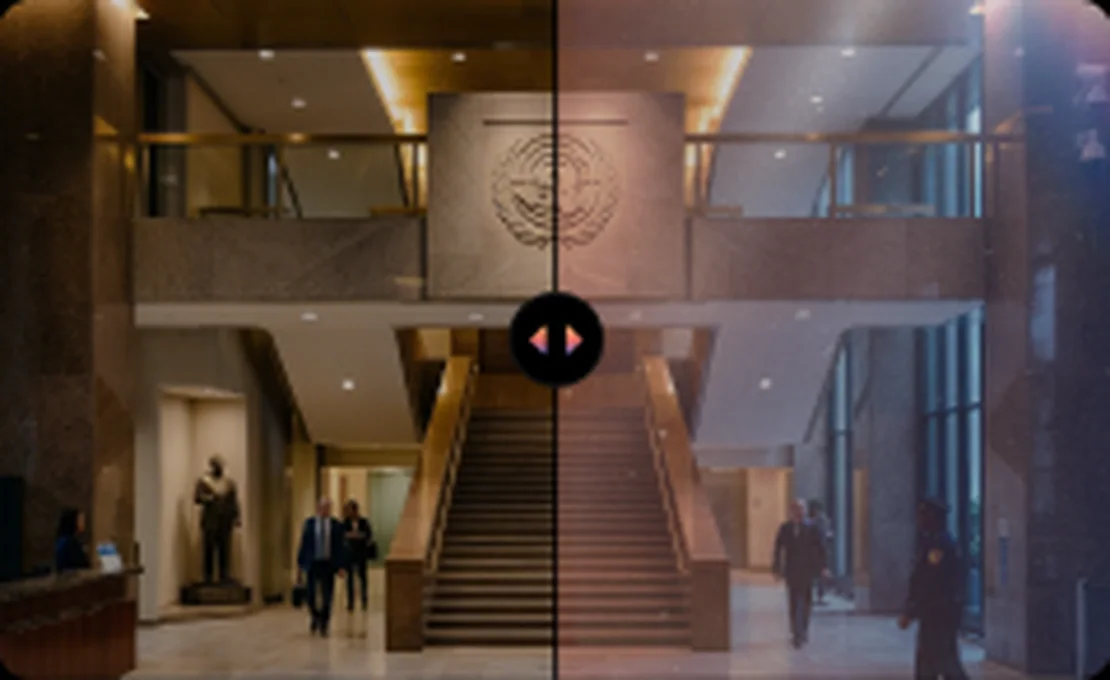
Beacons in the space broadcast the dynamic signature through ordinary-looking light (visible or infrared).

02
Capture
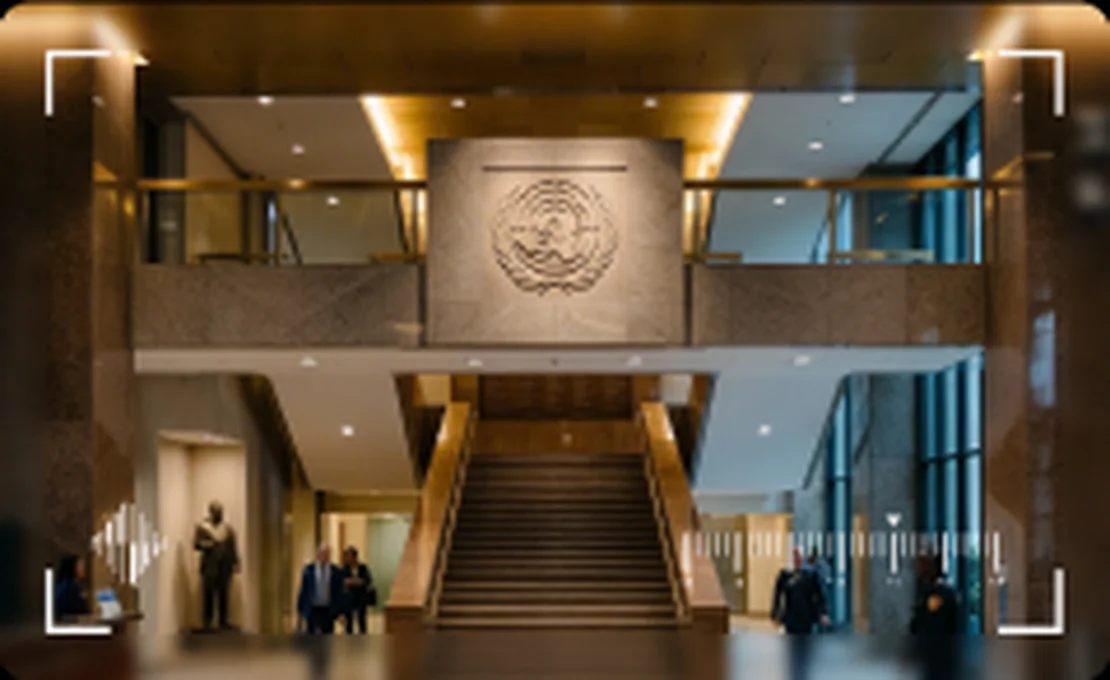
Every camera present records the signature together with the scene. No app, no firmware, no cooperation from the operator.
03
Verify
Upload a clip or call the API. The engine matches the signature to the beacon, time window and space, and maps integrity per pixel.
What makes it different
Evidence from the physical world, not claims about a file.
A dynamic signature, not a static mark
Each beacon emits a pattern of light that changes continuously and is cryptographically derived per beacon and per time window. It cannot be predicted in advance or replayed later, which is what separates it from a watermark.
Captured by any camera
Standard CMOS sensors record the signature as part of the scene. Broadcast cameras, CCTV, phones and bystander devices all carry it. Nothing is installed on the camera.
Read per pixel
Verification works per pixel and per captured light path. A pixel that does not carry the signature reads as an absence of signed light, so inserted or replaced regions show up where they are.
Built to survive distribution
Because the evidence lives in the image rather than in metadata, Lightmark is designed to survive cropping, filters, re-compression and re-upload. Robustness targets are being validated in pilots.
Pixel-level proof.
Verification follows every captured light path. Where the signature is present, the pixel is authenticated. Where it is missing, the pixel is treated as an absence of signed light, rendered black in the integrity map. Edits, inserts and AI in-painting show up exactly where they are.
Illustrative integrity map
Deploy it your way
Beacon hardware
Fixed units for venues and facilities, portable kits for events and field teams, and modules for OEM integration into lighting and devices.
Verification platform
A dashboard for teams that need to check footage, with reports and audit trails. Customers sign in at lightmark.tech.
API & on-premises
Integrate verification into newsroom, trust & safety or detection pipelines, or run it inside your own infrastructure.
Questions, answered.
What exactly is the dynamic signature?
A continuously changing optical pattern broadcast by Lightmark beacons. It is derived cryptographically for each beacon and time window and is imperceptible to the human eye. It is the patent-pending core of the technology.
Does the beacon record anything?
No. Beacons only emit light. They contain no camera or microphone and collect no personal data. Verification only happens on footage that someone chooses to submit.
Where does verification run?
In Lightmark's hosted platform, via API, or on-premises for sensitive environments such as defence and government.
What does a verification report contain?
The signed space and beacon the footage matches, the capture time window, frame coverage and a per-pixel integrity map, packaged as a dispute-ready report.
How mature is the technology?
Patent pending (PCT filed May 2025). Lightmark is running early-access pilots; performance figures are published only once measured in those pilots.
See the dynamic signature on your own footage.
We'll walk your team through the architecture, the threat model and what a pilot would prove.
Book a briefing